Why do Hindus Wear Marks on the Forehead like Tika or Tilak?

A devote Hindu draws a mark on the forehead known as Tika or Tilak or Tilakam or Pottu. The wearing of a mark on the forehead is a unique feature associated with Hinduism. There are no strict common rules regarding the drawing of mark on the forehead in Hindu religion.

Basically, the wearing of Tika invokes a feeling of sacredness on the wearer and on the people with whom the wearer comes into contact. Tilak, or Tika, is also a religious symbol and they reveal the particular God worshipped by the wearer.

  • Worshippers of Lord Vishnu wear a Chandan (sandalwood paste) Tilak of the shape of “U.” Vertical lines usually represent Vaishnava devotees.
  • Lord Shiva worshippers apply a three horizontal line bhasma or sacred ash. Horizontal lines represent Shaiva devotees
  • Worshippers of Devi or the female goddess apply a red dot of kumkum.
  • A red tika is widely applied during pujas on devotees by priests.
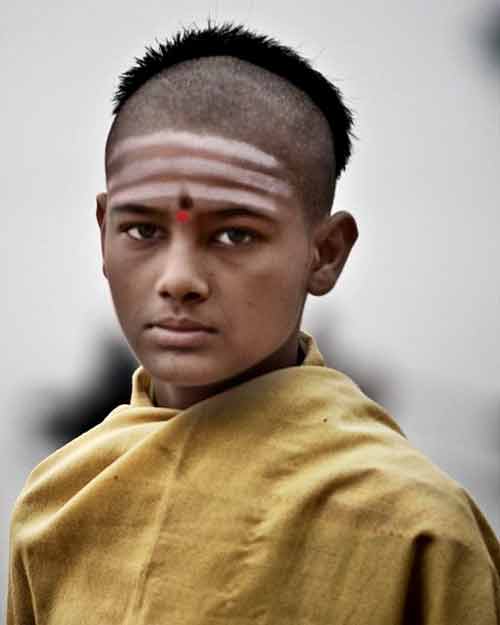
The tilak worn by Hindu priests have more significance. It represents the particular school of thought or Sampradaya he represents. The lines and the color used by priests vary from region to region and from sect to sect.

There are also Hindu temples which have unique tika. Devotees who visit the temple are offered these unique tika long with the ‘prasad.’ Thus there are temples which offer black colored tika obtained from the burning of coconut and there are temples which offer clay or white mud.

There are also millions of Hindu devotees who apply a simple chandan mark, or bhasma mark or red mark. For them it is a divine mark and a blessing of God that they apply daily before venturing out into the world. Bhasma is applied on the entire forehead by many devotees.

Usually, the Tilak is applied on the forehead between the eyebrows. This spot is known as Aajna Chakra and is considered to be the seat of memory and thinking.

It is also said that the chandan or bhasma cools the forehead and the spot between the eyebrows, which is known to generate heat during stress and tension. It is also known to prevent energy loss.

The most famous Indian mark on the forehead is the Bindu or Bindi worn by females and it has no real religious significance and is part of makeup. The red dot applied on the top of the forehead (near the hair) is the mark of a married female.


8 comments:

Lothar Seifert said...

Namaste,

Thank you for this good description for Tika. That is not easy to understand for people from Germany.

Anonymous said...

How about the scientific approach or interpretation of the tika or pottu. Like many science based teaching or knowledge it is watered down for the uneducated people to understasnd so this tika or pottu is watered down by religionists to explain to the ueducated crowd. Read what Saavitri Pundit has to say about this and you will understnad the scientifc basis of this. Knowledge of science of our ancestors are being watered down by religionists.

Anonymous said...

why do you nhjot write what Saavitri Pundit has to say?
Where can I read it?

nim_alan390@hotmail.com said...

Hi. What is the significance of Guru Raghavendra wearing chandan tilak on their temples (side of the head)?

Anonymous said...

Be explained about the three lines drawn on forehead by shaivas.What these three lines stand for?What is represented thereby?

Unknown said...

Hello, just wanted to say the red dot married women apply on forehead is supposed to be a little above the nose in the middle of forehead. Not near the hair.
It is supposed to cover 'third eye' part according to some explanations.
Red dot is only for the married woman and should not be used for fashionable look by single women.

Anonymous said...

why do people keep one hand behind the head while taking a tikka on the forehead.

Anonymous said...

Why do Hindus touch feet to give respect to someone?

According to Aryan Mythology, Hindus belonged to one of the below 4 categories:
[1] Brahman : This category was supposed to be most literate people with all the knowledge of Past, Present and Future.
[2] Kshatriya: This category used to be the royal families who rule over the world and when there reigns need, they use to fought battles.
[3] Vaish: They were supposed to do all high-class work to get food for all the above 3 categories.
[4] Shudra: They were supposed to be the lowest caste and all low level work was taken from them.

All the categories had their own importance but the 3 higher classes began to ill-treat the Shudras and even called the Untouchables.

Now back to the question, our whole body is divided into the 4 castes.
[1] Head the Brahmans
[2] Shoulders the Kshatriyas
[3] Stomach the Vaish and
[4] Feet the Shudra.

So if you want to respect anyone, first touch the Untouchables.

Post a Comment

All comments are moderated and will appear only after approval. If you like to contact me - hindublog@gmail.com.